September Update
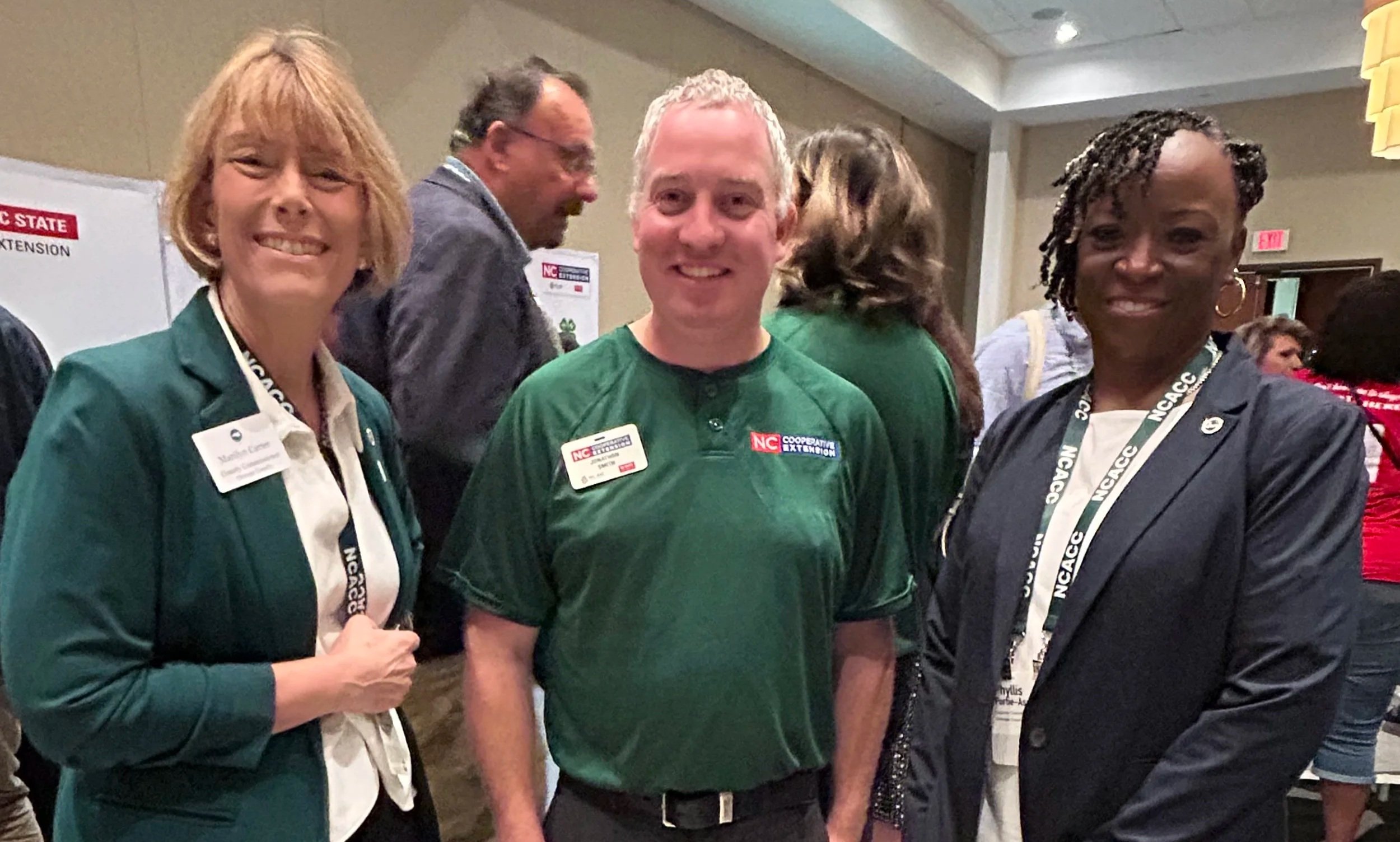
With Commissioner Marilyn Carter and Jonathon Smith, Orange County Extension Director at the NCACC Annual Conference in Durham
September is my birthday month, so between that and getting my daughter resettled in Charlotte, it's already been a full one!
I've been asked to serve on the North Carolina Association of County Commissioners (NCACC) General Government Steering Committee again this year. Our first meeting is September 22, and I'll keep you posted on anything that touches home.
I also just got back from the NCACC Annual Conference in Durham — a three day event with more than 650 commissioners from across the state. Two sessions particularly stuck with me: "Property Tax Reappraisals and Budgeting" and "Tax Policy Changes and What Commissioners Need to Know." Between those sessions and the hallway conversations, one thing was clear: county governments across the state are thinking about the constitutional amendment on property taxes that will be on the ballot this fall.
So let's talk honestly about this constitutional amendment and what it means for you.
On the November ballot: Constitutional Amendment on Tax Rates
This November, you'll be voting on a constitutional amendment that would require the NC General Assembly to limit how much local governments, including Orange County, can increase property tax levies each year. In May, the General Assembly decided to put this question to the voters, so it will appear on this fall’s ballot as a potential amendment to our state constitution.
The question you'll see on your ballot reads:
"Constitutional amendment requiring limits on property tax increases by local governments."
Your choices: “Yes” to adopt this provision, or “No” to reject it.
If the amendment is adopted, important decisions about property tax levies will be removed from local governments’ discretion and put under the direction of the NC House and Senate. Notably, the amendment itself doesn't set a cap on property taxes; instead, it directs the General Assembly to write that legislation later. This means that any specific details affecting the amount of property taxes a local government can collect will be decided in future legislative sessions. The legislature would still need to determine what the property tax limit would be and whether or not it would account for inflation, population growth, reappraisal cycles, disaster relief, and more.
I'll be straight with you: property tax is one of the only revenue levers our local Board of Commissioners actually controls. It's how we fund schools, public safety, and the services you tell me you care about at every budget hearing. That's exactly why the NC Association of County Commissioners convened a special committee to study the potential consequences of this amendment. The committee includes four commissioners, four county managers, four finance officers, and four tax administrators from across the state. Commissioners Todd McNeill and Shinica Thomas are co-chairing this team.
The group has been meeting weekly since late August to prepare a list of recommendations for the General Assembly to consider if the measure is approved. They have been working through the real tradeoffs and wrestling with how any tax limit should treat inflation, population growth, reappraisals, disaster recovery, and voter-approved projects. Orange County doesn't have a seat on the committee itself, but as a member of the NCACC Board of Directors, I'll be one of the people reviewing and voting on their recommendations when they come before the full Board on October 16. I'll report back on where things land.
So - What Do Your Property Taxes Actually Pay For?
Your property taxes fund two categories of local spending: mandatory spending and discretionary spending. Counties are mandated to, or “must,” provide essential public services such as public education, social services, public health, mental health, jail operations, and election administration. These services are typically funded through a combination of local, state, and federal resources. In fact, our County Manager's office tells me that 84% of our budget goes toward public health, public education, and human services — that's how much of what we do isn't optional.
But a lot of what makes Orange County Orange County — libraries, parks and recreation, land use planning, and support for the arts — falls into the discretionary category of spending. These are things that counties “may” choose to fund, but are not required to fund.
Those "may" items are the ones a rigid property tax levy limit would put the most pressure on, because they're the ones our Board actually has a choice about funding. The "must" list doesn't go away no matter what happens in November; the county is still on the hook for it. What changes is how much funding is left over for everything else.
I want you walking into the voting booth with real information about these expenses and how decisions at the state and local levels affect them. Here are some upcoming listening sessions and resources to help sort it all out:
For the nuts and bolts, NCACC provides some good background information, and UNC’s School of Government offers a plain-language breakdown of the bill.
Join me, Rep. Renée Price, Hillsborough Mayor Pro Tem Meaghan Darab, and Orange County Schools Board Chair Carrie Doyle for a town hall on the state budget and how it's hitting local government on Thursday, October 1, 6:00–7:15 p.m., at the Whitted Building. This town hall is free, open to everyone, and we'll leave real time for your questions.
"Understanding North Carolina's Courts: A Community Judicial Forum" on Sunday, October 4, 2:00–3:30 p.m., will be hosted by Alpha Kappa Alpha Sorority's Psi Gamma Omega and Mu Omicron Omega chapters. The forum is at First Baptist Church in Chapel Hill (106 N Roberson St) and there is a reception afterward. A panel of judges will walk through how our courts work, how judges get elected, and why it matters. Free and open to everyone, this is a great way to head into this fall's elections informed.
As always, reach out if you've got questions.

Phyllis Portie-Ascott
Orange County Commissioner, District 2